Artificial Grass for Pets and Play Areas: Getting the Base Right
Why drainage, membranes, infill choice and shock pads matter more than the grass itself for dog gardens, schools and nurseries.
Artificial grass has a reputation for being easy: roll it out, pin the edges and forget about it. For an ordinary lawn that is close enough to the truth. But the two places where artificial grass is growing fastest, dog-friendly gardens and school or nursery play areas, are also the two places where a poor installation shows up quickest. Smells, puddles, flattened patches and bruised knees almost always come down to what is underneath the grass rather than the grass itself.
Why the base matters more than the grass
Every good installation starts the same way: the old turf is dug out, edging goes in, a compacted stone sub-base is laid and levelled, and a membrane is fitted before the grass is cut, joined and secured. On a family lawn, small shortcuts in that process might only lead to the odd ripple or soft spot. Under a dog's favourite corner or a busy playground, the same shortcuts lead to standing water, lingering odours and surfaces that wear out years too early.
Artificial grass for dogs and other pets
The most common complaint about pet lawns is smell, and the cause is rarely the grass. If urine cannot drain straight through, it sits in the layers underneath. That is why the choice of aggregate and membrane is so important. Some installers use a sub-base that includes limestone, which helps neutralise urine, together with a membrane that is fully porous in the right direction, so liquid passes down and away rather than lingering.
Infill is the other big factor. Kiln-dried sand is widely used on ordinary lawns, but in dog areas it can clog the drainage holes in the backing and hold onto urine, which is exactly what causes odours. Many specialists leave it out of pet installations altogether. A mid-length pile of around 35 to 38mm is a popular choice for dog owners, as it is soft underfoot but still practical to keep clean, while heavy-traffic areas need a shorter, harder-wearing pile that will not be trodden flat.
- Ask how deep the groundworks will go and what the sub-base is made of
- Check that the membrane is fully porous and suited to pet use
- Ask whether sand infill will be used, and why
- Choose edging that will not rot, such as paving blocks or composite sleepers rather than timber
- Look for grass with UV protection so it does not fade in sun or from urine
Rinsing the area regularly and getting the installation right from the start are what keep a pet lawn fresh. If you are comparing options for artificial grass for dogs in Reading, ask each installer to explain how their groundwork deals with drainage and odour, because that is where the real differences lie.
Artificial grass for schools, nurseries and play areas
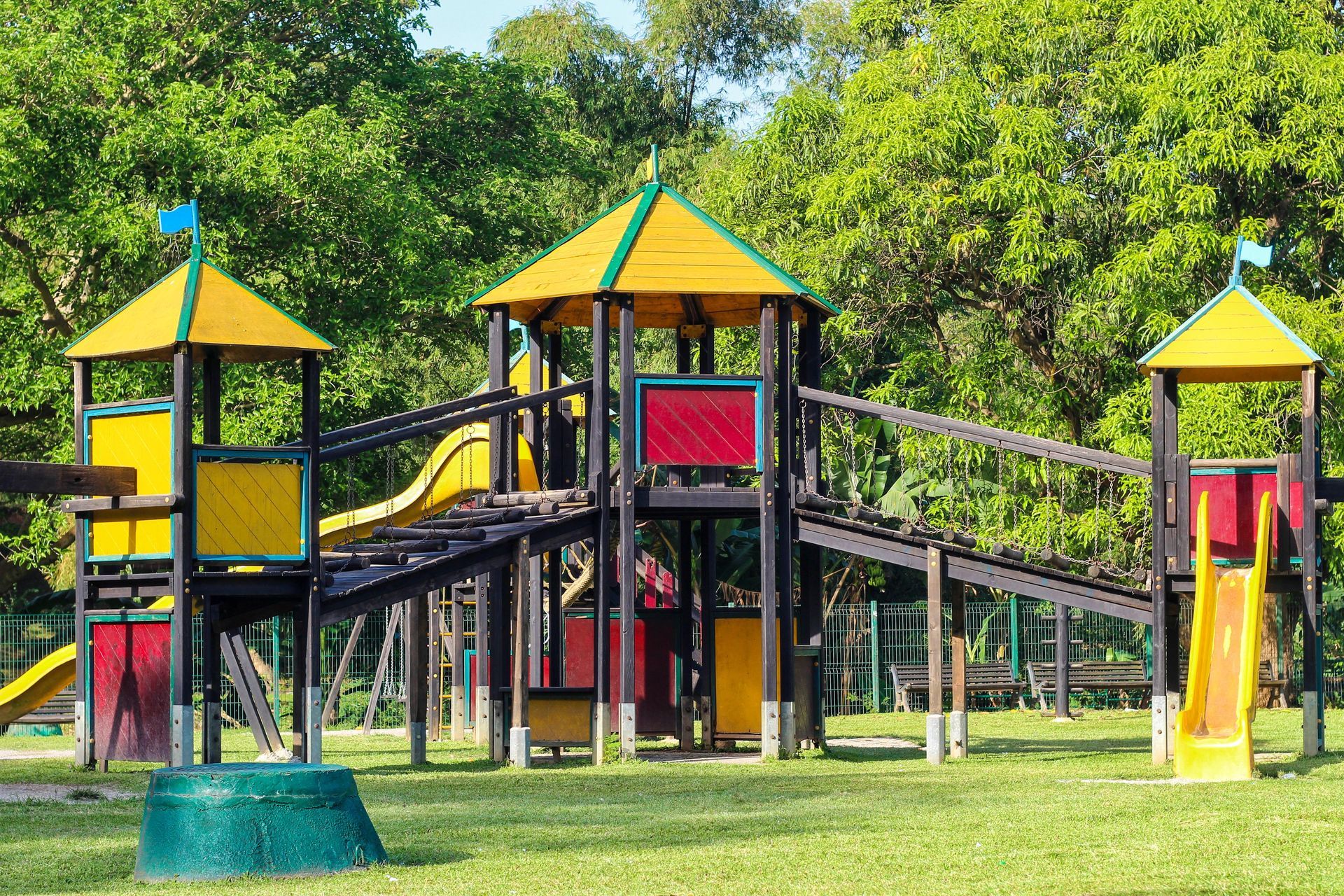
Play areas ask a different question of the installation: how quickly can children use the space after rain, and how safe is it when they fall? A full, free-draining sub-base means the surface can be used soon after a downpour, so lessons and events are not lost to waterlogged grass or mud. Underneath climbing frames and slides, an extra layer of shock padding gives the cushioning that young children need, so it is worth asking the installer how the padding has been matched to the equipment.
Maintenance is the other reason schools are moving away from bark and wood chippings. Loose materials blow away, rot and usually need replacing within a year or so, and they hide whatever animals leave behind. A modern infill-free surface needs very little upkeep, with no top-ups to arrange and no sand or rubber crumb being carried into classrooms and changing rooms. For larger sites, 4G pitches can be used for most of the year and even hired out to local clubs.
When planning artificial grass for school play areas in Reading, ask for a clear breakdown of the sub-base, the shock pad specification under any equipment and the guarantee on the grass itself.
Questions to ask any installer
- What goes underneath? Depth of excavation, type of aggregate and type of membrane.
- Will you use infill? And if so, is it suitable for pets or play use?
- What edging will you use? Rot-proof edging lasts far longer than timber.
- What does the guarantee cover? The grass, the installation, or both?
- Do you supply and fit? Installers generally guarantee only materials they have supplied and fitted themselves.
Get these answers before you choose, and a pet lawn or play area will stay clean, safe and usable for many years. For more on choosing installers, see our artificial grass category.