Knocks, Slips and Squeals: Reading Your Car's Warning Signs
What suspension knocks, a slipping clutch and squealing brakes usually mean, and which repairs a mobile mechanic can do at home.
Cars rarely fail without warning. A new noise, a change in how the pedals feel or a car that no longer drives in a straight line is usually the first sign that a part is wearing out. Spotting these early keeps repairs smaller, cheaper and safer, and many of them can be fixed without the car ever going to a garage.
Knocks and clunks: suspension
The suspension takes a pounding from potholes and speed bumps, and worn parts tend to announce themselves with noise. Common signs include:
- Knocking over bumps: often worn ball joints, drop links or shock absorbers
- A humming or growling that rises with speed: usually a wheel bearing, often louder when cornering one way
- Pulling to one side or uneven tyre wear: a worn component on one side, or alignment that needs checking
- Bouncing after a bump: shock absorbers that are no longer doing their job
A broken coil spring or a leaking shock absorber should be dealt with straight away. Most of these parts can be replaced where the car is parked, and suspension repairs at home in Coventry and other areas avoid the cost of recovery to a workshop.
Slips and judders: the clutch
A clutch wears a little every time it is used, and city driving wears it faster. The warning signs are easy to recognise once you know them:
- Slipping: the engine revs rise but the car does not speed up, especially uphill or in a higher gear
- A high biting point: the clutch only engages near the top of the pedal travel
- Juddering when pulling away: often a worn clutch or, on many diesels, the dual mass flywheel
- Difficulty selecting gears or a pedal that stays down: sometimes hydraulic rather than the clutch itself
Replacing a clutch means removing the gearbox, so it is a bigger job than most, but with the right equipment a clutch replacement on your driveway is often finished the same day on smaller cars. A good mechanic will inspect the clutch and gearbox first to confirm the clutch really is the fault.
Squeals and grinding: brakes
Brakes are the one system you should never put off. Listen and feel for:
- Squealing: many pads have a wear indicator that squeals when they are getting thin
- Grinding: pads worn down to the metal, which quickly damages the discs
- A soft or spongy pedal: air or old fluid in the system, or a leak
- Pulling under braking: a sticking caliper or uneven wear from side to side
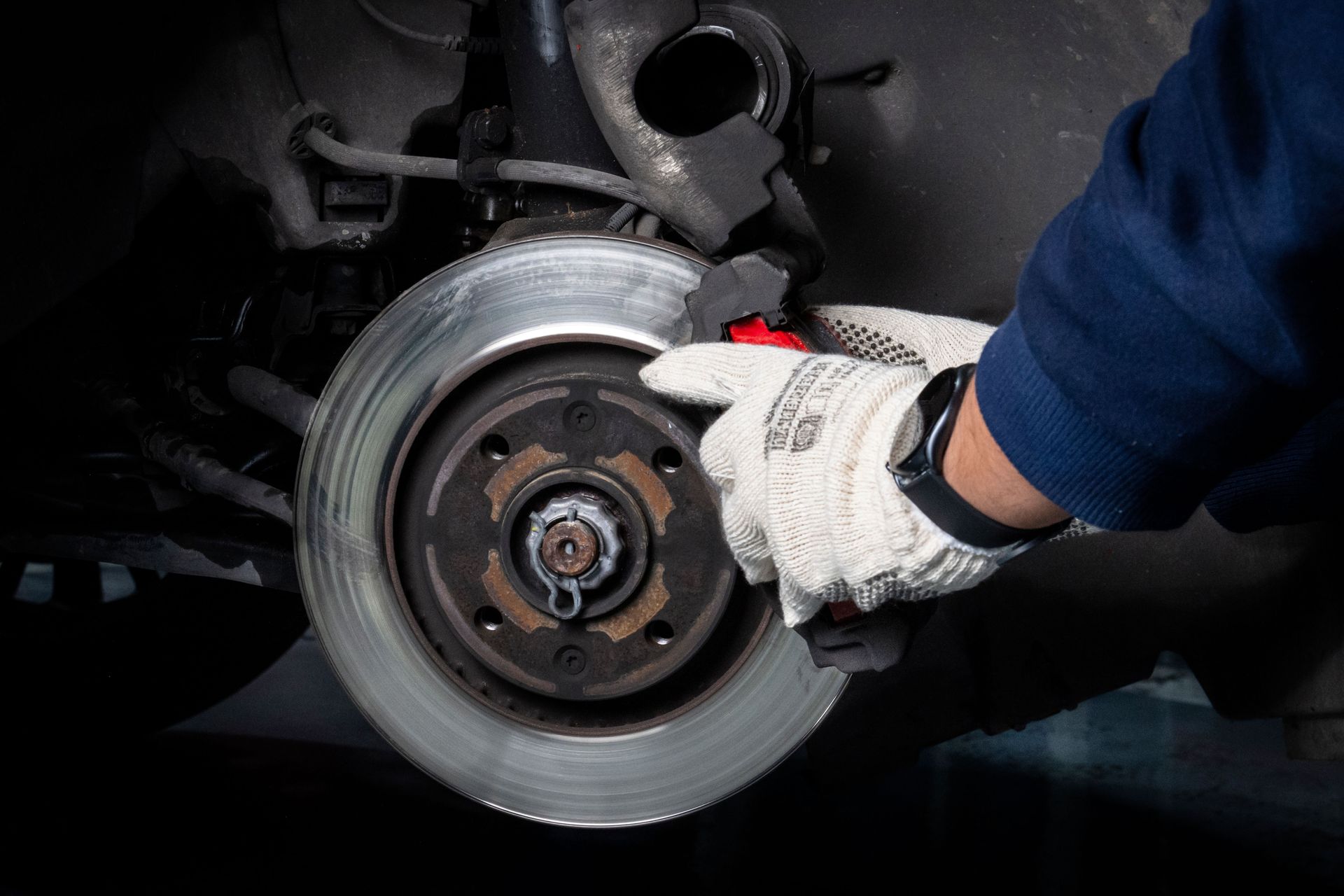
Pads on the same axle are always replaced together, and brake fluid is usually changed every two years. Because driving on worn brakes is risky, mobile brake repairs carried out at home or at work are often the safest option.
What to tell your mechanic
- When the noise or problem happens: at speed, over bumps, when braking or when pulling away
- Whether it is getting worse, and how quickly
- Any warning lights on the dashboard
- Any advisories from the last MOT
A clear description helps a mechanic diagnose the fault quickly and bring the right parts first time. For more on servicing and repairs, see our vehicle repairs and servicing category.