
Cleaning
Cleaning Companies and Services - Inside and Out
Indoor Cleaning
Cleaning services in the UK have evolved well beyond the traditional “weekly cleaner” model. Today’s customers expect specialist capability, flexible booking, clear standards, and visible results—whether that’s a spotless kitchen after a busy family week, a compliant and presentable office environment, or an outdoor space restored from winter grime. From domestic housekeeping and deep cleaning to commercial contracts, end of tenancy cleans, and exterior maintenance like driveway and patio washing, roof cleaning, decking restoration, and artificial grass rejuvenation, the modern cleaning sector covers almost every surface and setting where hygiene, appearance, or maintenance matters.
The main categories of UK cleaning services
Most cleaning providers sit across one or more of the following categories:
1) Domestic cleaning (house cleaning)
Domestic cleaning remains the most familiar service type. It typically includes routine tasks such as vacuuming, mopping, dusting, bathroom and kitchen cleaning, wiping surfaces, emptying bins, and basic tidying. Many companies offer:
- Regular cleans (weekly, fortnightly, or monthly) to maintain a consistent baseline.
- One-off cleans for busy periods, before guests arrive, or after renovations.
- “Light housekeeping” add-ons such as changing bed linen, loading/unloading dishwashers, or ironing (where offered).
In practice, domestic customers usually want reliability and consistency: the same cleaner, predictable standards, and an approach that respects their home and privacy. The best providers will be clear about what’s included, what’s excluded (for example: high-level cobweb removal, internal windows, oven cleaning, or heavy limescale removal), and how they tailor the scope to the time booked.
2) Deep cleaning
Deep cleaning is a step up in intensity and detail. It is designed to address build-up that regular cleaning won’t fully remove—grease, ingrained dirt, limescale, hard-to-reach areas, and high-touch points that can be overlooked over time. It often includes:
- Detailed bathroom descaling and sanitisation
- Kitchen degreasing (including splashbacks, appliance exteriors, cupboard fronts)
- Skirting boards, door frames, light switches and handles
- Interior windows (if requested/accessible)
- More thorough floor treatment, edges and corners
- Targeted treatment of problem areas such as mould spots (within safe and appropriate limits)
Deep cleans are commonly booked when moving into a new property, after building work, before putting a home on the market, or as a “reset” a couple of times a year. Customers are typically choosing between “a longer regular clean” and a true deep clean; good companies will explain the difference clearly, set realistic outcomes, and quote based on the property condition rather than a generic hourly estimate.
3) End of tenancy cleaning
End of tenancy cleaning is a specialist category driven by the rental market. Tenants and landlords often need the property returned to a condition suitable for check-out inventories. This service tends to be more structured than domestic cleaning and may include:
- Full kitchen clean including inside cupboards and sometimes appliances (oven and fridge often priced separately or as add-ons)
- Bathrooms thoroughly descaled and sanitised
- All floors cleaned appropriately (vacuum, mop, edge detail)
- Internal windows, glass, and mirrors
- Dusting and wipe-down of reachable surfaces, fixtures, and fittings
Because deposits and disputes can be involved, customers frequently look for companies offering checklist-based cleans, clear exclusions, and in many cases a re-clean guarantee (subject to terms). Importantly, reputable providers won’t promise unrealistic outcomes if the property has damage, heavy mould, pest issues, or neglected maintenance. They will also be clear about what their service can and cannot fix.
4) Office and commercial cleaning
Commercial cleaning includes offices, retail units, hospitality, gyms, clinics, schools, and industrial spaces. The expectations here are often defined by consistency, professionalism, and compliance. Common elements include:
- Daily or scheduled cleaning of workstations and shared spaces
- Washroom servicing and consumable replenishment
- Kitchenette cleaning and sanitisation
- Floor care (vacuuming, mopping, machine scrubbing for larger spaces)
- High-touch point cleaning (handles, switches, rails)
- Waste handling and recycling processes
Modern office cleaning is increasingly shaped by employee wellbeing and brand perception. Many businesses want a cleaning partner that can work discreetly, outside peak hours, and provide documented standards. For certain environments—healthcare, beauty clinics, food prep areas—companies may also require specific methods, colour-coded cloth systems, COSHH awareness, and risk assessments.
5) Specialist indoor services
Beyond the core categories, many companies offer specialist add-ons or separate services, such as:
- Carpet and upholstery cleaning (hot water extraction, low-moisture methods)
- Oven cleaning
- Mattress cleaning
- Mould and condensation treatment (often limited to surface cleaning unless remediation is required)
- Post-build / after-renovation cleaning to remove dust, residue, adhesive marks, and construction debris (where appropriate)
These services typically require specific equipment and training, and customers often judge providers on technical credibility: process explanation, before/after examples, and realistic timeframes for drying or re-entry.

Outdoor cleaning services: more than kerb appeal
Exterior cleaning has grown in popularity across the UK, partly because homeowners increasingly view outdoor areas as usable living space—patios for entertaining, driveways as the “front door” of the home, and garden features like decking or artificial grass as long-term investments. Outdoor cleaning is also about maintenance: removing organic growth, preventing slip risks, and extending the life of surfaces.
1) Driveway and patio cleaning
This typically involves pressure washing or power washing, sometimes with pre-treatment for algae, moss, or lichen. Common surfaces include:
- Block paving
- Concrete
- Tarmac/asphalt
- Natural stone and porcelain paving
Reputable companies will adjust pressure and nozzles based on the surface type to avoid damage. For block paving, many customers also request:
- Re-sanding with kiln-dried sand after cleaning (to stabilise joints)
- Sealing to help reduce future staining and weed growth (with important caveats—sealing isn’t always suitable and should be done correctly)
Customer priorities here are visible: they want a dramatic improvement and they want it done without mess, damage, or overspray. A professional provider will manage run-off responsibly and advise on realistic results where staining is deep or where the surface has aged.
2) Decking cleaning and restoration
Decking—timber or composite—collects algae and becomes slippery. Services may include:
- Gentle washing to remove algae and surface grime
- Brightening treatments for timber
- Optional re-oiling or staining (more restoration than cleaning)
Decking is a good example where “stronger pressure” is not better; excessive pressure can fur timber and shorten its life. Customers often choose a company that understands the material and can advise on an annual maintenance approach.
3) Roof cleaning and gutter services
Roof cleaning is a specialist service that can include:
- Moss removal (often by manual scraping and collection)
- Soft washing with treatments intended to inhibit regrowth
- Gutter clearing and flushing
- Fascia, soffit, and conservatory roof cleaning
This category is important because risk management matters: working at height, access equipment, insurance, and safe methods. Many customers look for evidence of professionalism here—risk assessments, clear method statements, and proof of insurance—because the consequences of poor workmanship can be severe.
4) Artificial grass cleaning
Artificial grass is marketed as low maintenance, but it still benefits from periodic cleaning. Services can include:
- Debris removal and brushing to lift the pile
- Deodorising treatments (particularly for pets)
- Weed removal at edges
- Light washing to remove dust and organic build-up
Customers often book this seasonally, especially in spring and late summer, or after heavy winter use.
5) Render, cladding, and exterior walls
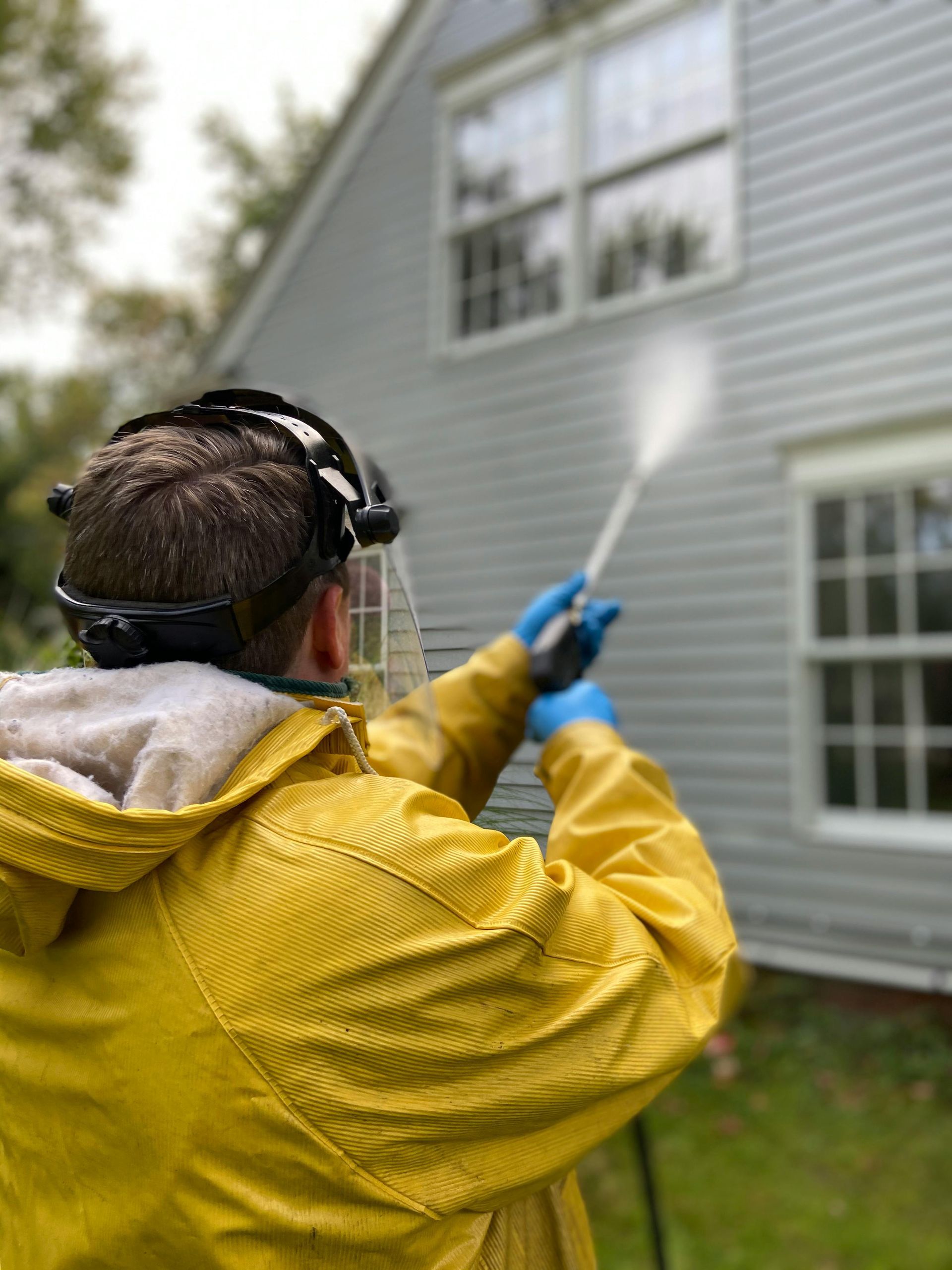
As modern properties increasingly use rendered finishes and cladding, demand has grown for safe exterior wall cleaning, often using soft washing methods. These surfaces can be sensitive, so customers generally choose providers that can explain how they avoid damage and manage chemical use responsibly.
Trends shaping cleaning services in the UK
While cleaning will always be a practical service, customer expectations are changing. Several trends now influence what people book and how they choose providers.
Eco-friendly and “health-conscious” cleaning
Environmental considerations are now a mainstream differentiator rather than a niche. Customers increasingly ask about:
- Reduced-harsh-chemical options and scent preferences
- Plant-based or biodegradable products
- Microfibre systems that reduce chemical reliance
- Responsible dilution and COSHH compliance
- Waste reduction (refill systems, reduced single-use plastics)
For some clients, “eco cleaning” is primarily about sustainability. For others, it’s about living with allergies, pets, children, or sensitivities to strong fragrances. Companies that can offer a clear product policy and practical options—without compromising standards—often stand out.
Increased demand for specialist, “results-led” services
The rise of social media before/after culture has influenced expectations. Customers want transformation: grout revived, limescale eliminated, patios restored, carpets refreshed. This pushes demand toward providers who:
- Use the right equipment and techniques
- Provide realistic outcome guidance
- Document work with photos
- Offer structured checklists and clear scope
Flexible booking and transparent pricing
Customers now commonly expect quick quotations, easy booking, and clarity on what is included. In residential markets, there is strong preference for:
- Online booking or rapid response via messaging
- Clear minimum call-outs or fixed-price packages
- Add-ons displayed transparently (oven, fridge, inside windows, carpet shampoo, sealing)
- Choice between hourly and fixed-price models
Commercial customers tend to prioritise service-level agreements, KPIs, and reliable scheduling over “cheap hourly rates.”
Trust signals matter more than ever
Because cleaning services involve access to private spaces (homes) or sensitive environments (offices), trust is not optional. Many customers will decide based on confidence rather than price alone.
What makes someone choose one cleaning company over another?
In a competitive market, the decision typically comes down to a mix of professionalism, proof, and fit. Key factors include:
1) Reputation and reviews
Strong Google reviews, consistent feedback about reliability, punctuality, and quality control are often the single biggest decision driver. Customers look for patterns: “shows up on time,” “great attention to detail,” “good communication,” “no surprises.”
2) Clear scope and no ambiguity
People want to know exactly what they are paying for. The best companies avoid vague promises and instead provide:
- A written checklist or scope
- Transparent add-ons and exclusions
- An estimate based on property size and condition
- Time and access requirements (parking, water supply for outdoor jobs, power access)
3) Professional standards and safeguarding
In homes, customers value vetted staff, insurance, and respectful conduct. In offices, they want uniforms/ID, alarm procedures, data sensitivity, and dependable key holding. Even small operational details—like shoe covers, cloth colour systems, and tidy storage—can separate premium providers from casual operators.
4) Consistency and quality control
For regular domestic and office cleaning, consistency is the product. Customers often choose companies that provide:
- The same cleaner or stable team
- Supervisor spot-checks
- A simple process for feedback and corrections
- Service continuity when staff are off
5) Environmental and ethical positioning
For a growing proportion of clients, responsible practices are a deciding factor: eco product options, fair staff treatment, and a professional attitude to waste and run-off (particularly for outdoor cleaning).
6) Specialism and capability
Customers with a specific need—end of tenancy standards, roof moss removal, delicate stone cleaning, post-build dust control—often prioritise specialist experience over general “we do everything” claims. Clear evidence, method explanations, and a portfolio of similar jobs help convert enquiries into bookings.
Bringing indoor and outdoor cleaning together
Many UK households and businesses now prefer a single provider or coordinated service plan: for example, an end of tenancy clean paired with carpet cleaning, or a spring deep clean paired with patio washing and decking treatment. This reflects a broader trend toward “property presentation” and preventative maintenance. Cleaning is no longer just about hygiene; it’s about protecting finishes, preserving value, reducing long-term repair costs, and making spaces feel good to live or work in.
For customers, the best results come from choosing a provider who matches the job: a domestic specialist for regular housekeeping, an end of tenancy team with checklist discipline, a commercial operator with compliance and consistency, or an exterior cleaning specialist with safe methods and proper equipment. For cleaning companies, the opportunity lies in clarity, trust, and service design—offering options that fit modern lifestyles, environmental expectations, and the increasingly high standards people have for the spaces around them.